 Random Pokemon Generator
Greninja Weakness (2x)
Electric Grass Fighting Bug Fairy
#658 · Water / Dark · Ninja Pokemon · Gen 6
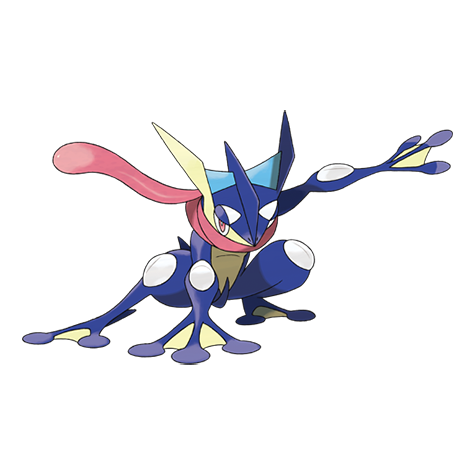
The ninja Pokemon, and the fastest thing this dex has covered yet. Greninja runs a Water and Dark dual type on a 530 base stat total — built to move first and never be caught.
BST 530
Abilities: Torrent · Protean (hidden) · Evolution stage: final
From the full 18-type grid on the Pokemon Type Chart.
Electric Grass Fighting Bug Fairy
Fire Water Ice Ghost Dark Steel
Psychic
The pokedex is growing — these pages are live now.
Pokemon stats and facts
Greninja is Pokemon number 658 in the national dex and the Ninja Pokemon of Generation 6. It carries the Water and Dark dual type on a 530 base stat total, and it is the final form of its line: Frogadier is the only way in, and nothing goes out. Torrent is the ability it always carries; Protean waits in the hidden slot. Three stages, one region, and a debut so popular the anime built a whole arc around it.
Defensively the card reads balanced rather than bulletproof: five weaknesses (Electric, Grass, Fighting, Bug and Fairy) against six resists (Fire, Water, Ice, Ghost, Dark and Steel) and one full immunity to Psychic. Nothing there is exotic, and nothing there is fragile either — the pairing keeps the list even on both sides. The Psychic blank is the standout freebie: a whole attacking type that cannot touch it.
Water and Dark cover each other neatly: Water keeps Fire, Ice and Steel matchups soft, and Dark blanks the Psychic moves that usually hunt Water types. The trade is five weaknesses spread across common attacking types, so the defensive half is less about resisting the world and more about never being in the wrong place at the wrong time. The trick is that both halves of this card are offensive types first — the defense is a side effect, not the identity.
The stats are built around doing everything first: Speed 122 is the marquee number and Sp. Atk 103 gives it something to do when it gets there. The rest of the spread is thin on purpose — 67 Defense and 71 Sp. Def mean the plan is to never let the fight reach the turn where those numbers get tested.
Read the six numbers: 72 HP, 95 Attack, 67 Defense, 103 Sp. Atk, 71 Sp. Def, 122 Speed. Everything funnels toward the last one — 122 is a full tier above the rest of the card, and the whole build is the bet that it never has to be anywhere else. The 67 and 71 defenses are the honest cost: it can take a stray hit, not a real one, so the plan is to keep the hits one-way.
At 122 the fast lane belongs to it: almost nothing it meets is attacking before Greninja does, and for a card this light, first strike is the whole survival plan. The line's final form carries 530, clear of Frogadier's 405, and 530 lands right on the typical final-stage mark near 509. Build around the Speed, patch the Defense if there is spare room, and the rest of the plan holds. And the jump is real: this is a starter line that saves almost everything for the last step.
In practice the weak list is five names long and mostly manageable: Electric and Grass are the two that show up in the wild often enough to plan around, while Fighting, Bug and Fairy tend to arrive in specific fights you can see coming. On the safe side, Fire, Water, Ice, Ghost, Dark and Steel all land soft, and Psychic does nothing at all. A six-deep resist list and a free switch is a good defensive diet for a glass cannon.
The rule of thumb: switch it in on anything Water or Dark resists, keep it away from Electric and Fairy moves, and never leave it in for a second hit — this is a hit-and-run specialist, not a member of the wall club. Read the matchup right and it wins the fight on the switch-in; read it wrong and the thin defenses settle the argument. Treat every switch-in as a plan, not a habit, and the speed does the rest.
In a Nuzlocke the question is simple: does it survive the next route and pay the debt back? Roll the run in the Nuzlocke Team Builder, and draw replacements from the Random Pokemon Picker when a slot opens mid-route. When two choices look identical, the Pokemon Wheel Spinner picks the winner. On a finished team it takes the fast lane: the revenge killer that comes in after a teammate falls and settles the score before anyone can answer.
Greninja's speed settles most battles before the first move lands. The Pokemon Team Picker shows where that speed fits into the six, and the Pokemon Nature Chart explains what a Jolly or Timid build trades away before the spread gets locked. Planning a shiny hunt? Pokemon Shiny Odds has the numbers, and the Random Shiny Pokemon Generator does the rolling. The Blog goes deeper on natures, odds and challenge rules.
FAQ
Greninja is a Water and Dark dual type: weak to Electric, Grass, Fighting, Bug and Fairy, resistant to Fire, Water, Ice, Ghost, Dark and Steel, and completely immune to Psychic. Neutral everywhere else, and the even split — five in, six out — is the whole defensive picture. Nobody is going to be surprised by this matchup card, and that is exactly its charm.
Electric, Grass, Fighting, Bug and Fairy, all at double damage. Psychic does nothing at all, and six other types come in at half power. Re-check the matchup card before a gym, a rival battle, or any fight that actually matters.
Froakie becomes Frogadier, and Frogadier becomes Greninja — three stages, two checkpoints, and the Water typing flows all the way through while Dark joins at the finish. Every step is permanent, and the last one is where the speed finally arrives.
Torrent is the standard ability and Protean is the hidden one, and they could not be more different: Torrent is a comeback tool that wakes up the Water moves at low HP, while Protean turns every move Greninja uses into a same-type attack, which is as strong as it sounds. Protean takes special routes to find, so most runs only meet Torrent. Build for the ability you actually have.
Three stages end to end: Froakie, Frogadier, and Greninja — Water the whole way, with Dark arriving at the final step, and 530 total as the destination. Nothing fancy on this road: level-ups at 16 and 36, and the line is done.
Speed 122 is the highest number in the spread by a wide margin, and the entire card is arranged around it: go first, hit from the special side, and make the turn count. The thin defenses are the price; the first strike is what it buys.