 Random Pokemon Generator
Bulbasaur Weakness (2x)
Fire Ice Flying Psychic
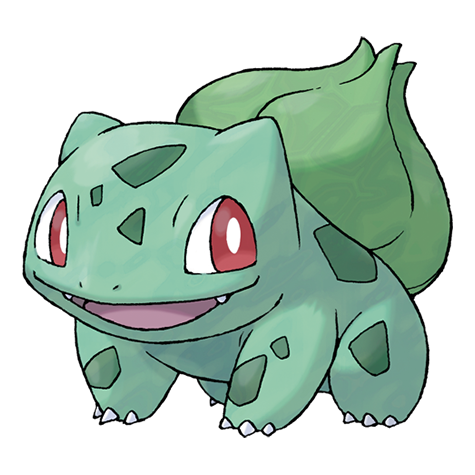
#001 · Grass / Poison · Seed Pokemon · Gen 1
The seed Pokemon, and the most defensive of the Kanto starters. Every campaign starts with a choice, and Bulbasaur is the one that quietly wins long fights instead of ending them fast.
BST 318
Abilities: Overgrow · Chlorophyll (hidden) · Evolution stage: initial
From the full 18-type grid on the Pokemon Type Chart.
Fire Ice Flying Psychic
Water Electric Grass Fighting Fairy
The pokedex is growing — these pages are live now.
Pokemon stats and facts
Bulbasaur is the first Pokemon in the national dex and the Grass-type starter of the Kanto region. Bulbasaur evolution into Ivysaur at level 16 turns it from a slow tank into a proper wall, and the Bulbasaur abilities tell the story: Overgrow for comebacks, Chlorophyll for sun teams. The bulb on its back is not decoration: it has been there since hatching, absorbs sunlight for energy, and gives the species its name. Games and anime both lean into the "unassuming and patient" read of it. A Bulbasaur does not charge in; it sits, takes a hit, and answers with the right move.
In Generation 1 it was the only starter that carried two types from the start. Charmander was pure Fire, Squirtle pure Water, while Bulbasaur was already Grass/Poison. That split identity shows up everywhere in the games, from gym emphasis to the anime's depiction of the species as a textbook tank with a case of tailwhip damage.
Grass and Poison cover each other's weak spots more than most pairings. Bulbasaur weaknesses land on Fire, Ice, Flying and Psychic, and the Poison type cancels the common 2x weaknesses Grass carries against Bug and Poison, and turns the unfortunate standard "one bug hits it" matchup into a neutral one. Poison itself is weak to Psychic and Ground, which Grass does not help with, but it does turn Fairy attacks into a resist, and there are several Fairy-type gym fights in modern games where a Venusaur parks on the field and takes every hit.
The trade-off shows in the defensive numbers. A defensive Grass/Poison core wants special walls, which is exactly what 65 Sp. Def provides, and the hidden ability Chlorophyll gives it a second identity: in sunny weather, a Venusaur outspeeds almost anything that is not scarfed or hitting 120+. That is the difference between "Bulbasaur is a tank" and "Bulbasaur becomes a fast attacker the moment the sun is out."
Bulbasaur stats start from a 318 base stat total, and the spread tells you the intent. HP 45 and Defense 49 are not great, but look at the special side: Sp. Atk 65 and Sp. Def 65 both beat the physical stats. Bulbasaur wants to be a special attacker taking special hits, not a wall on the physical side. At level 16 it evolves into Ivysaur, and at 32 it becomes Venusaur, whose 525 total comes with Thick Fat in later generations — which hard-cuts the Fire and Ice weaknesses that punished this line for so long.
Speed 45 is the real limiter. Bulbasaur is not winning a speed tie against much in Gen 1. What it has is staying power and coverage: the Grass/Poison combo gives it early access to Sleep Powder, Vine Whip and Razor Leaf, and the Poison typing means a Pidgey's Gust is not the threat it would be otherwise.
Weak to Fire, Ice, Flying and Psychic at 2x. That list is the whole story of the Kanto early game: Brock is Rock-type (fine for Bulbasaur), Misty is Water (great), Lt. Surge is Electric (also a resist), but Erika's grass gym and Sabrina's Psychics look like mirrors. The classic casual answer to Psychic in Gen 1 is a strong physical attack; a fully evolved Venusaur carries Earthquake through the Hidden Machine system and dodges that problem eventually.
Its resistances pull more weight than its weaknesses early on. Water and Electric are two of the most common types in any playthrough, and the Fairy resistance has mattered since Gen 6 in the same way. A Bulbasaur fronting a Water-type gym trainer can sit on the back row and eat everything thrown at it. That is the whole argument for picking it over the other two starters for a defensive run: it makes the early game boring, and boring wins runs.
For a Nuzlocke, the starter pick is the whole first route, and Bulbasaur is the forgiving option: overgrown grass and a Poison resist means fewer deaths before the first gym. Roll your own ruleset with the Nuzlocke Team Builder, and if you need a replacement encounter at any route, the Random Pokemon Picker draws one from the same 1,025-species pool. Once the team comes together, check its coverage against the 18-type Pokemon Type Chart, and combine this line with a Chlorophyll run using the Pokemon Wheel Spinner for the sunny-day fun.
The rest of the suite takes over after the pick: the Pokemon Team Picker hand-builds a squad around a Venusaur core, the Pokemon Nature Chart recommends what nature to breed, and the Pokemon IV Calculator verifies the stats before you commit to a set. If you want the artwork as a card, the Pokemon Card Generator handles it, and the Pokemon Trainer Card Generator makes the trainer who runs it. Shiny hunters get the odds from Pokemon Shiny Odds and the roll from the Random Shiny Pokemon Generator. Guides on the blog cover natures and odds in depth. The rest of the suite is one click away: Random Pokemon Generator · Nuzlocke Team Builder · Pokemon Smash or Pass · Pokemon Wheel Spinner · Who's That Pokemon · Pokemon Team Picker · Random Pokemon Picker · Random Pokemon Name Generator · Random Mega Pokemon Generator · Random Shiny Pokemon Generator · Pokemon Shiny Odds · Pokemon Nature Chart · Pokemon Type Chart · Pokemon IV Calculator · Pokemon Card Generator · Pokemon Trainer Card Generator · Pokemon Search.
FAQ
Bulbasaur is a Grass and Poison dual type. That combination resists Water, Electric, Grass, Fighting and Fairy, and is weak to Fire, Ice, Flying and Psychic. It is the only starter line with a dual typing right out of the box.
Bulbasaur is the defensive pick among the Kanto starters. Its 318 base stat total leans toward survival: 45 HP and 49 in each defense look low, but the Grass/Poison typing patches several common early-game threats. It struggles against Fire-types, which show up a lot in Gen 1 gyms.
Fire, Ice, Flying and Psychic, all at 2x damage. Bug and Poison are neutral, and normal-type moves do not get any bonus. The Poison typing is what saves it from Grass attackers and gives it the edge against Fairy-types.
Bulbasaur evolves into Ivysaur at level 16, then into Venusaur at level 32. Venusaur keeps the Grass/Poison typing, jumps to a 525 base stat total, and gets Thick Fat as its hidden ability every generation after Gen 6.
Overgrow boosts Grass moves by 50% only when HP is below a third, which makes it a comeback tool. Chlorophyll doubles speed under strong sun, turning Bulbasaur from a slow wall into a fast attacker in Kanto's sunny teams. For casual play Overgrow is easier to trigger; for weather teams, Chlorophyll is stronger.
Bulbasaur evolves into Ivysaur at level 16 and into Venusaur at level 32. Ivysaur keeps the same typing and abilities, while Venusaur jumps to a 525 base stat total, gains Thick Fat as a hidden ability after Gen 6, and becomes the standard sun-team wall.